How to Create Engaging Content Your Audience Will Love
Published on 2025-12-02
Before you can ever hope to create content that stops someone mid-scroll, you have to know exactly who you're trying to stop.
Go Beyond Personas and Truly Understand Your Audience

Let's be honest. The foundation of truly great content isn't some secret hook or a slick graphic. It’s a deep, genuine understanding of the person on the other side of the screen.
A lot of marketers stop after creating a basic "buyer persona"—you know the drill. A made-up character with a name, a job title, and a few generic hobbies. It’s a start, but that's where most people go wrong. This surface-level approach misses the details that actually create a connection.
The best content feels like it was written for one specific person. It taps into their secret worries, speaks their language, and makes them feel understood. And you don't get that level of insight from guesswork. You get it from good old-fashioned listening.
Digging for Real-World Intelligence
To get past the generic avatars, you need to put on your detective hat. The goal is to find the raw, unfiltered thoughts of your audience. That means going to the digital hangouts where they already are and just paying attention.
Here are a few goldmines for this kind of intelligence:
- Social Media Comments: Seriously, read the comments. Check out posts from industry leaders, your competitors, and even your own content. What questions keep popping up? What debates are they having?
- Online Forums and Communities: Places like Reddit, Quora, or niche industry groups are treasure troves. People there aren't performing for a brand; they're looking for real answers from people they trust.
- Customer Service Logs: Your support team is on the front lines. Dig into their chat logs and emails. The exact words customers use to describe their problems? That's the language you need to be using in your content.
This isn't just about collecting data. It's about building empathy. When you get what keeps your audience up at night, you can create content that offers a real solution, not just another sales pitch.
The most engaging content doesn't just answer a question; it addresses the underlying emotion behind the question. It connects with the reader's frustration, ambition, or curiosity on a human level.
From Pain Points to Content Pillars
After you've done some digging, you'll start to see patterns. Certain questions, challenges, and themes will come up again and again. These are your content pillars—the core topics your audience is starving for.
Think about a sales team using LinkedIn. They aren't just searching for "how to send a connection request." If you listen closely, you'll find their real pain points are things like:
- The fear of getting their account restricted for being too active.
- Frustration over low acceptance rates from the C-suite.
- Total uncertainty on how to follow up without being a pest.
Boom. Suddenly you have three powerful, specific ideas that are miles better than a generic tutorial. This detailed approach is the heart of a successful audience analysis, a process that stops you from shouting into a void and starts a real conversation. You can learn more about these fundamentals in our guide to what is audience analysis: https://tryunibox.com/blog/what-is-audience-analysis
This investigative work is the difference between content that gets a polite "like" and content that gets bookmarked, shared, and talked about for weeks. To really get beyond basic personas, it helps to have a structured approach to your research. For a deeper dive, Formbricks offers a fantastic breakdown of 9 Essential User Research Methods. It’s this commitment to understanding the person, not just the persona, that sets the stage for everything that follows.
Craft Hooks and Stories That Stop the Scroll

So, you know who you’re talking to. Now comes the hard part: getting them to actually listen.
On a platform like LinkedIn, your first sentence isn't just an introduction. It's a bouncer at the door, deciding who gets in and who keeps scrolling. Your entire post lives or dies in that first line.
A killer opening, or hook, doesn't have to be some shocking clickbait. It just needs to create a tiny spark of curiosity or a flicker of recognition. It should make your ideal reader pause and think, "Wait, are they talking about me?"
The best hooks tap into a shared struggle, a surprising statistic, or a contrarian take on a common belief. They make an unspoken promise that the next 30 seconds will be worth it. If you want to master this, we've put together a full guide on how to write a hook that truly grabs people. https://tryunibox.com/blog/how-to-write-a-hook
A Good Hook Is Only Half the Battle
A great hook gets them to stop, but a good story gets them to stay. Humans are wired for stories—it’s how we’ve passed down knowledge for millennia. A narrative helps people process information, creates an emotional connection, and makes your point unforgettable. A list of facts is easily forgotten.
You don’t have to be a novelist to be a storyteller. In fact, some of the most effective frameworks are deceptively simple. My personal favorite, and one that works for almost any topic, is Problem-Agitate-Solve (PAS).
It's a classic for a reason: it perfectly mirrors how we think about our own challenges.
- Problem: Start by clearly stating a pain point your audience knows all too well. Be specific. Make them nod their head in agreement.
- Agitate: Now, don't just leave the problem there. Poke it a bit. Describe the frustration, the wasted time, or the missed opportunities it causes. This is where you build the emotional bridge.
- Solve: After dialing up the tension, you swoop in with the solution. You’re not just offering a tool or a tip; you’re offering relief.
My Take: I see PAS less as a sales formula and more as an empathy engine. When you show people you understand the frustration behind their problem, not just the problem itself, you build instant trust.
This simple structure creates a mini-narrative that pulls your reader through the post, wanting to see how it ends.
Turning Dry Facts into a Compelling Story
Let's make this real. Imagine you're writing a post about a new sales outreach tool. The typical, boring approach is to just list the features. A storyteller does it differently.
The Feature-Driven (and Forgettable) Approach:
"Our new tool automates LinkedIn connection requests and has a unified inbox to manage conversations."
Sure, it's accurate. But it’s also completely lifeless. It doesn't connect with a single real-world pain point.
The PAS Narrative (The Scroll-Stopping Approach):
- (Problem) Does the first hour of your day feel like a frantic scramble between your email, LinkedIn messages, and CRM, just to figure out who to follow up with?
- (Agitate) A warm lead replied on LinkedIn three days ago, but you only just saw it. That little green dot is gone, the trail has gone cold, and you can’t help but wonder if a commission just vanished into thin air.
- (Solve) What if every single LinkedIn DM and email landed in one smart inbox? Imagine seeing every conversation in context, never dropping the ball on a follow-up, and turning that morning chaos into closed deals.
See the difference? The second example tells a story. It validates the salesperson's daily frustration and positions the solution as the hero they’ve been looking for. That’s how you create content that doesn't just get seen—it gets felt.
Design Content for Maximum Readability and Impact
You could write the most brilliant, game-changing post in the world, but if it shows up as a dense wall of text, no one will read it. It’s a harsh truth. The visual design of your content is just as crucial as the words you choose.
Think of it this way: good formatting invites your reader in. Bad formatting tells them to scroll on by. We’re all scanners online—in fact, most people only read about 20% of the text on any given page. Your job is to make that 20% count by guiding their eye to the good stuff.

Break Down Your Text for Scannability
The single most effective thing you can do is chop up your paragraphs. Long, chunky blocks of text are a reader’s worst enemy, especially on a phone screen where most of us are scrolling through LinkedIn.
I live by a simple rule: no paragraph should ever be longer than three sentences. Sometimes, I even use single-sentence paragraphs for emphasis. This creates vital white space that gives the reader's eyes a break and makes your message feel more approachable.
Once your paragraphs are short and punchy, start layering in other formatting tools to create a clear visual flow.
- Strategic Bolding: Don't just bold random words. Use it to highlight a key statistic, a surprising insight, or the main takeaway of a paragraph. Think of it as a signpost for the skimmers, pointing them to the most valuable bits.
- Bullet Points and Lists: Got a series of tips, steps, or examples? Turn them into a list. Our brains are wired to process information in this format, making complex ideas feel much simpler and more organized.
- Subheadings: Use clear H3 subheadings to break your post into logical parts. A good subheading acts like a mini-headline, telling the reader exactly what to expect in the next few sentences.
Great formatting isn't just about making things look pretty. It's about respecting your reader's time and making your content as easy as possible for them to absorb.
Go Beyond Text with Powerful Visuals
Well-formatted text is your foundation, but to really stand out, you need strong visuals. Our brains process images 60,000 times faster than text, which makes them an incredible tool for grabbing attention in a crowded feed.
But please, don't just slap a generic stock photo on your post and call it a day. The best visuals are there for a reason; they actually add to the story you're telling.
Here are a few ideas:
- Custom Graphics: A simple chart or graph can make data pop in a way that plain text never could. It turns a dry statistic into a compelling visual insight.
- Relevant Screenshots: Are you explaining how to use a tool or walking through a process? Annotated screenshots are gold. They show your reader exactly what to do instead of just telling them.
- Video Content: Video is the undisputed king of engagement on social media. It’s not just a trend; it's how people prefer to learn and connect. Marketers have found that video helps them boost user understanding (99%), increase brand awareness (96%), and even generate leads (88%).
When you combine thoughtfully structured text with purposeful visuals, you create an experience that’s not just informative but also memorable. It signals to your audience that you’ve put care into both your message and its delivery. And if you're looking for inspiration on how to start strong, check out these examples of great hooks to stop the scroll.
Turn Passive Readers Into Active Participants
Getting a reader to nod along with your post is a good start. But getting them to actually stop, think, and join the conversation? That's the real win.
The best content on LinkedIn doesn't just end. It's a launchpad. Your job is to transform someone from a silent scroller into an active participant, and you do that by telling them exactly what to do next. This isn't about being bossy—it's about offering a clear, valuable next step through a well-crafted call-to-action (CTA).
A weak CTA feels tacked on. A strong one feels like a natural, helpful suggestion that continues the dialogue you just started.
Designing CTAs That Actually Work
Let's ditch the generic "Click Here" and "Learn More." The best CTAs are specific, show a clear benefit, and make perfect sense after what someone just read. They answer the reader's unspoken question: "Okay, what now?"
Your CTA needs to match your post's purpose. Are you trying to build a community, find new leads, or just teach something new?
- To Spark a Conversation: End with a simple, open-ended question. Instead of the vague "What do you think?" get specific. Try something like, "What’s one outreach mistake you wish you could take back?"
- To Send Traffic Elsewhere: Link to a resource that offers a deeper dive. For example, "If you want the exact templates I use for this, you can grab them in my full guide to cold email."
- To Generate Leads: Offer something valuable behind a simple sign-up. Think webinars, ebooks, or a checklist that solves the next logical problem for your reader.
The goal is to make the next step feel like a helpful continuation of the experience, not an abrupt sales pitch. It should be a smooth transition from reading your post to engaging more deeply with what you have to offer.
Moving Beyond CTAs with Proactive Engagement
Just asking a question at the end of your post isn't always enough to get the ball rolling. The most engaging content often pulls the reader in before they even finish reading. This is where you can get creative and turn your post into a genuine two-way street.
Interactive content works because it demands a response. The data backs this up, showing that interactive content boasts a 52.6% higher engagement rate than static posts. It makes sense why 33% of companies are shifting their focus to more entertaining, participatory content. You can dig into more content marketing statistics to see how other teams are adapting.
A post is a monologue; a poll or a quiz is a dialogue. By inviting your audience to contribute their opinion, you're not just asking for a click—you're telling them their voice matters.
Try weaving these simple formats into your content plan:
- Simple Polls: Use LinkedIn’s built-in poll feature. Ask a direct question with two to four clear options. It's a super easy way for people to engage and gives you a peek into how your audience thinks.
- "Fill in the Blank" Prompts: Post a sentence and ask your audience to complete it. Something like, "My most underrated sales tool is _________."
- Direct Questions in Comments: A smart, growing trend is to join conversations in the comment sections of other creators' posts. It’s a great way to add value and get in front of new audiences who are already engaged.
Interactive Content Formats vs Engagement Potential
Making your content interactive doesn't have to be complicated. Different formats serve different purposes, from quick feedback to deeper community building. Here's a quick look at how various interactive types stack up.
| Content Format | Primary Goal | Best Platform | Engagement Potential |
|---|---|---|---|
| Polls | Quick feedback, audience segmentation | LinkedIn, Twitter | High (Low-effort for users) |
| Quizzes | Education, lead generation | Website, Email | Very High (Personalized results) |
| Q&A/AMA | Building authority, community | LinkedIn Live, Instagram Stories | High (Direct interaction) |
| Calculators | Providing utility, lead gen | Website Landing Page | Medium (Higher-intent users) |
| Contests/Giveaways | Brand awareness, follower growth | Instagram, LinkedIn | Very High (Incentive-driven) |
Choosing the right format depends on what you're trying to achieve. A simple LinkedIn poll is perfect for a quick pulse check, while a more involved quiz on your website can be a powerful tool for capturing qualified leads.
By mixing clear CTAs with these interactive tactics, you create multiple ways for your audience to get involved. This approach does more than just boost your metrics; it builds a loyal community that shows up, contributes, and feels like a part of your story.
Let Creators Tell Your Story for You
Sometimes, the best way to create compelling content is to let someone else do the talking. If you're looking for a fast track to building trust, collaborating with creators who already have a loyal following in your niche is a fantastic move. This isn't about buying ad space; it's about borrowing a trusted voice.
Creator-led content just hits differently. It comes across less like a sales pitch and more like a solid recommendation from a friend, and that authenticity is pure gold. Think about it: nearly 50% of Gen Z and millennials feel a deeper connection to social media creators than they do to big-name celebrities.
It's Not About Follower Count, It's About Fit
Your first instinct might be to find creators with huge audiences, but that's often a mistake. The real goal is to find someone with the right audience. A micro-creator with 5,000 die-hard fans who are your ideal customers is way more valuable than a macro-influencer with a million followers who couldn't care less about what you do.
Focus your search on genuine alignment. Ask yourself a few key questions:
- Do their values match ours? Does the creator's overall vibe and the topics they cover resonate with your brand?
- Is their audience our audience? Dive into their comments. Do the people engaging there sound like the customers you want to attract?
- Is the engagement real? Look for actual conversations happening in the comments, not just a wall of fire emojis and "Great post!"
Once you've got a shortlist, don't just slide into their DMs with a business proposal. That’s a rookie move. Start by building a real connection. Leave thoughtful comments on their posts, share their work, and show them you genuinely appreciate what they do long before you ask for anything in return.
The goal here is a true partnership, not a one-off transaction. A single paid post might give you a quick visibility boost, but a long-term collaboration builds the kind of brand trust and advocacy that actually moves the needle.
Co-Create Content That Truly Connects
The whole point of working with a creator is their unique voice and perspective. The magic instantly vanishes the second their content feels like you wrote it for them. Don't just hand them a script and expect results.
Instead, give them the creative reins. They know what their audience responds to better than anyone. Get them access to your product or service and let them share their honest-to-goodness experience. This raw, unfiltered approach is always more powerful than a perfectly polished, brand-approved message.
The numbers don't lie. Investment in creator marketing has shot up by 143% in the last four years. Today, a whopping 94% of companies say creator content delivers a better ROI than traditional ads—a huge leap from 74% just the year before. You can dive deeper into these trends with more 2025 creator marketing statistics.
When you partner with a creator, you’re tapping into a relationship they've already spent years building. By working together to create something genuine, you're not just reaching a new audience—you're being welcomed into a community.
Use Data to Measure and Refine Your Content
Great content isn't a one-and-done deal. You can't just post something and hope for the best. The real magic happens in the feedback loop: you create, you measure, and then you refine. This is how you stop guessing what your audience wants and start knowing.
It's easy to get caught up in vanity metrics, but a "like" is cheap. It's a fleeting nod of approval that often means very little. Instead, we need to dig deeper and look at the numbers that signal real, genuine interest.
Look for Signs of True Engagement
So, what should you be tracking? It’s all about shifting your focus from passive acknowledgment to active participation.
These are the metrics that I've found actually matter:
- Comment Quality and Quantity: Forget the "great post" comments. Are people asking thoughtful questions? Are they starting real debates in the comments? That's the good stuff.
- Shares: A share is a massive vote of confidence. Someone found your content so valuable they were willing to put their own name on it and show it to their network. That's huge.
- Profile Clicks or Website Visits: This is a clear signal that your content did its job. It was compelling enough to make someone stop scrolling and take the next step to learn more about you.
Keeping an eye on these numbers will tell you which topics, formats, and hooks are truly hitting the mark. If you want to go deeper on this, we've put together a full breakdown in our guide on how to measure content performance.
Test, Analyze, and Iterate
Once you have some data coming in, you can start experimenting with purpose. Don't be shy about running a few A/B tests. Tweak your headlines, try different visuals, or change up your call-to-action and see what gets a better response.
Every so often, take a good look at your top-performing posts. Is there a common thread? Maybe your audience really connects with your personal stories, or perhaps they go wild for data-packed infographics.
Your best content is a roadmap. It tells you exactly what your audience wants more of. Don't ignore the clues it leaves behind.
This isn't about reinventing the wheel every time. It's about doubling down on what’s already working and ditching what isn’t. For instance, you might notice that posts featuring other creators get a ton of traction. That's a clear sign to build a more intentional partnership strategy.
Building out a creator partnership process doesn't have to be complicated. It's really about finding the right people and working together to create something authentic.
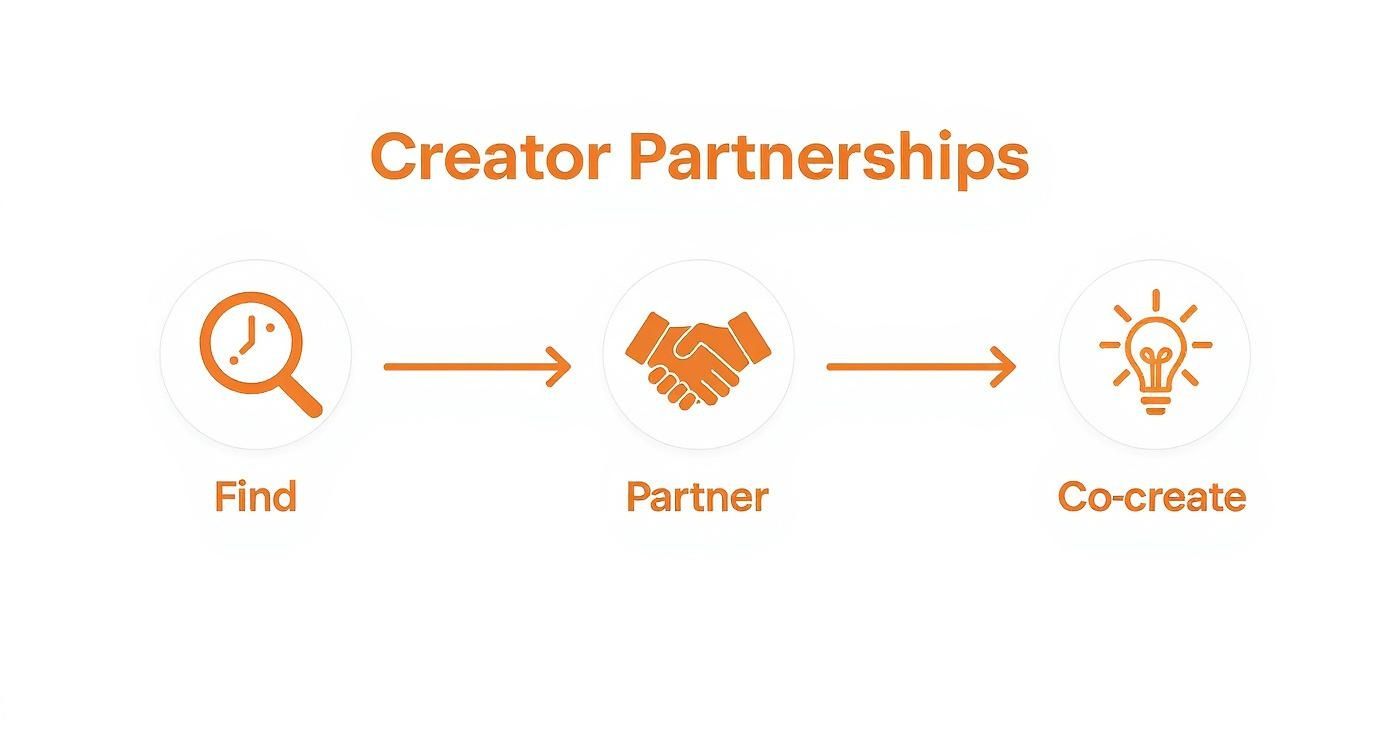
This workflow keeps things simple: find the right partners, align on goals, and then co-create content that feels natural and valuable to both of your audiences. By tracking the results of these collaborations, you can get smarter about who you partner with and how you do it, making each collaboration more successful than the last.
Got Questions? Let's Talk Content.
Even with the best game plan, a few questions always pop up. Let's tackle some of the most common ones I hear from creators trying to nail down their content strategy.
How Often Should I Be Posting on LinkedIn?
Look, there's no magic number here. The real key isn't frequency—it's consistency.
Posting three high-quality, genuinely helpful pieces a week will always beat seven rushed, forgettable ones. Start with a schedule you know you can stick with, whether that's twice a week or four times. Find your rhythm.
Pay attention to your analytics. If you ramp up to daily posts and see your engagement dip, that’s a clear signal you’re trading quality for quantity. It's all about finding that sweet spot for you and your audience.
What’s the Perfect Length for a Post?
This really depends on where you're posting and what you're talking about, but for a platform like LinkedIn, shorter is almost always better.
The goal is to be as long as necessary to get your point across, but as short as possible to keep people reading. A punchy, 100-word post with one clear, powerful takeaway will often do far better than a rambling 500-word essay.
Focus on impact. If you can say what you need to say in five lines, do that. Never add fluff just to make a post seem longer.
Do I Need to Be a Top Expert to Create Good Content?
Not at all. In fact, some of the most engaging content comes from people who are sharing what they're learning as they go.
You don’t have to be the world’s leading authority. Here are a few other ways to provide value:
- Document your journey: Instead of teaching from on high, share what you're figuring out right now. Frame your posts as, "Here's something new I'm learning about X." People love following a journey.
- Curate great ideas: Be the go-to source for your audience. Find the best insights from the real experts, and then add your own spin on why it matters to your network.
- Ask great questions: Starting a good conversation is just as valuable as having all the answers. Pose a thoughtful question and get your network talking.
Authenticity and a real desire to help your audience will always win out over a long list of credentials. Your unique perspective is what makes you stand out.
Ready to turn these insights into a reliable stream of meetings? Unibox automates your outreach on LinkedIn and email, centralizes your conversations, and helps you respond faster so you never miss an opportunity. Start your free 14-day trial and see how easy it is to scale your prospecting.